My Great Uncle in the Civilian Conservation Corps
A look back at the 1939–1941 Civilian Conservation Corps service record of Franklin County native Raymond Floyd Hulvey, my great uncle, stationed at Camp S-80 in Sewanee, Tennessee
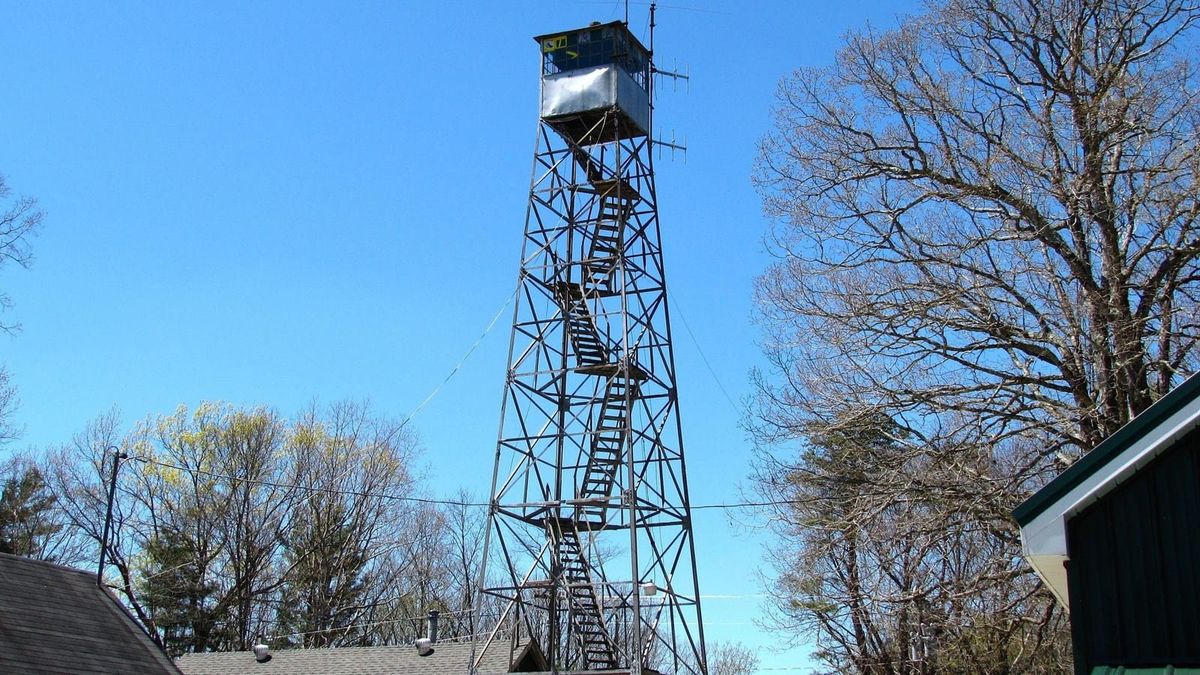
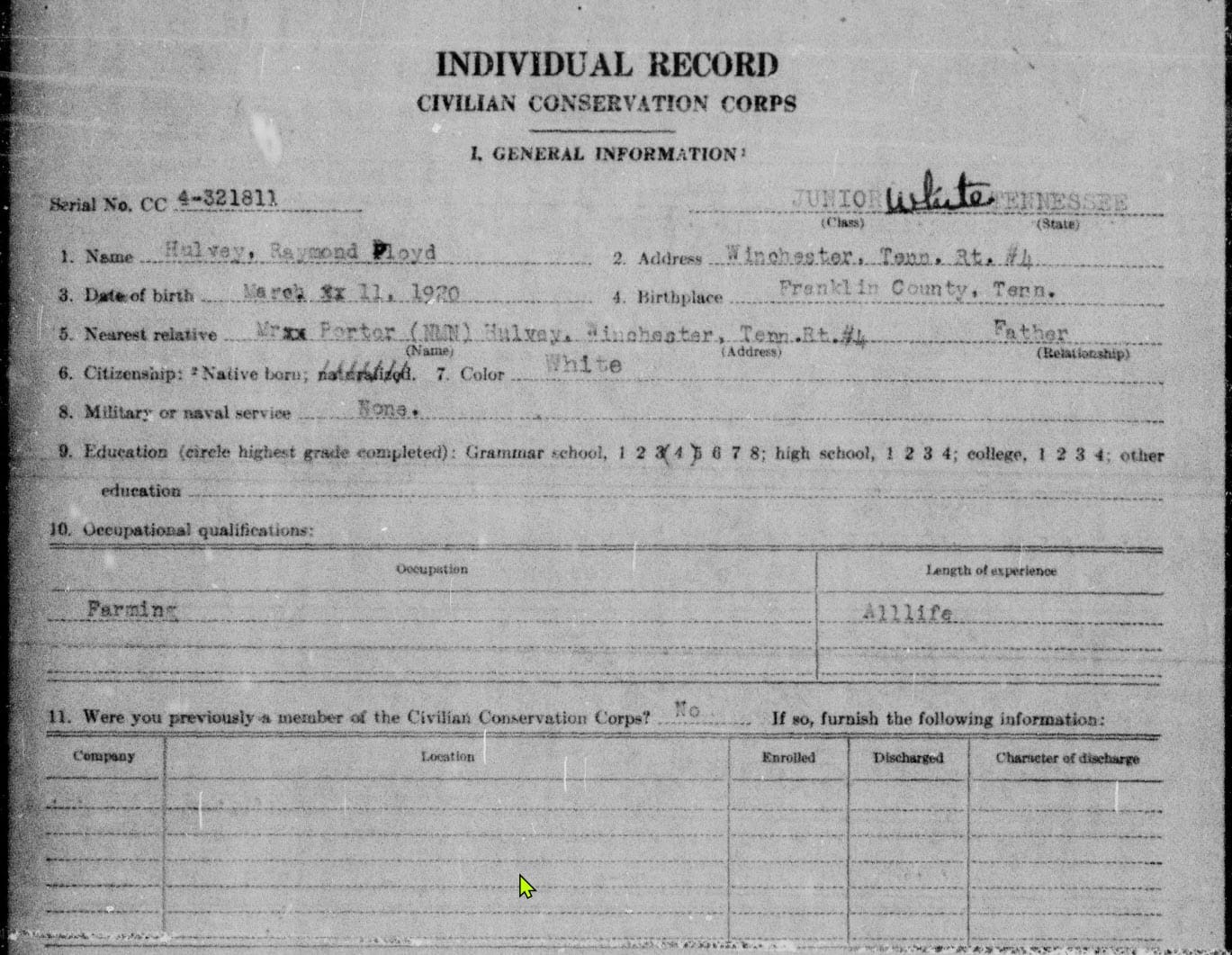
Digging Into the Archives: Raymond Floyd Hulvey’s Time in the CCC
I recently finished a fascinating piece of my family history pulled directly from the National Archives (NARA)—the official service record for Raymond Floyd Hulvey, my great uncle who lived in Middle Tennessee and served in the Civilian Conservation Corps (CCC) from 1939 to 1941.
Growing Up in Franklin County
Raymond was born on March 11, 1920, in Franklin County, Tennessee, and lived on Route #4 out of Winchester. Like a lot of young men growing up in rural Tennessee during the Depression, his formal schooling stopped early—he finished the 4th grade at Union Hill School in 1935 and spent his days farming alongside his father, Porter Hulvey.
When he signed up for the CCC in the spring of 1939 at age 19, his intake card described him as 5'8" and 150 pounds, with black hair and brown eyes. His serial number was CC4-321811.
Life at Camp S-80 in Sewanee, TN
On April 4, 1939, Raymond joined the 1475th Company and was stationed just up the mountain at Camp S-80 in Sewanee, Tennessee.
- The Work: Camp S-80 was a State Forestry Camp, meaning Raymond and his fellow enrollees spent their days doing vital conservation and forestry work across the Cumberland Plateau under Project Superintendent W. V. Lightfoot.
- Leadership: For most of his time there, he served under Capt. C.W. Armstrong, before Capt. James F. Shackelford took over command in late 1940.
Learning New Trades
One of the best things about the CCC was that it didn't just put young men to work—it taught them skills they could carry into civilian life. Raymond’s quarterly progress reports show him steadily moving up from basic manual labor to running heavy equipment:
- 1939: He started out learning woodworking and putting in hours on road construction.
- Early to Mid-1940: He took classes in reading and writing alongside learning tractor operation.
- Late 1940: By the end of his stint, he had moved on to truck driving—both in the classroom and behind the wheel—earning a "Very Good" proficiency rating.
A Few Rough Patches in the Infirmary
Living in close quarters in a 1930s forestry camp meant illnesses spread fast, and Raymond definitely had his share of bad luck early on. Just two weeks after enrolling in April 1939, he came down with the measles and had to be sent down to the Station Hospital at Fort Oglethorpe, Georgia. Less than two weeks after getting back, he was right back at Fort Oglethorpe for a severe throat infection (a peritonsillar abscess).
Aside from a couple of minor bouts with colds and stomach bugs at camp, he stayed healthy until November 1940, when a case of the mumps landed him in the Fort Oglethorpe hospital one last time. Even while laid up recovering, his camp evaluations noted his performance as "Satisfactory".
Supporting the Family Back Home
The CCC was designed to keep families afloat during hard times, and Raymond’s pay stubs tell that story clearly:
- 1939–1940: Enrollees made a base pay of $30.00 a month. Out of that, $22.00 was automatically mailed home every single month to his mother, Mrs. Porter Hulvey, helping support their six-person farming household back in Winchester, TN.
- 1941: Starting in January 1941, the rules shifted slightly. His mother received $15.00 a month, while the Finance Officer put $7.00 a month into a mandatory savings account so Raymond would have a lump sum of cash in his pocket when he left the Corps.
Heading Home
After completing his maximum two-year enrollment term, Raymond received an Honorable Discharge from Camp S-80 on March 29, 1941. Subaltern John S. Day signed off on his final character and work evaluations as "Satisfactory," and the government paid for his trip from Sewanee back home to Winchester.
It's interesting to visit and hike trails that their hard work went into building in the parks and in the forests on the Cumberland Plateau today.